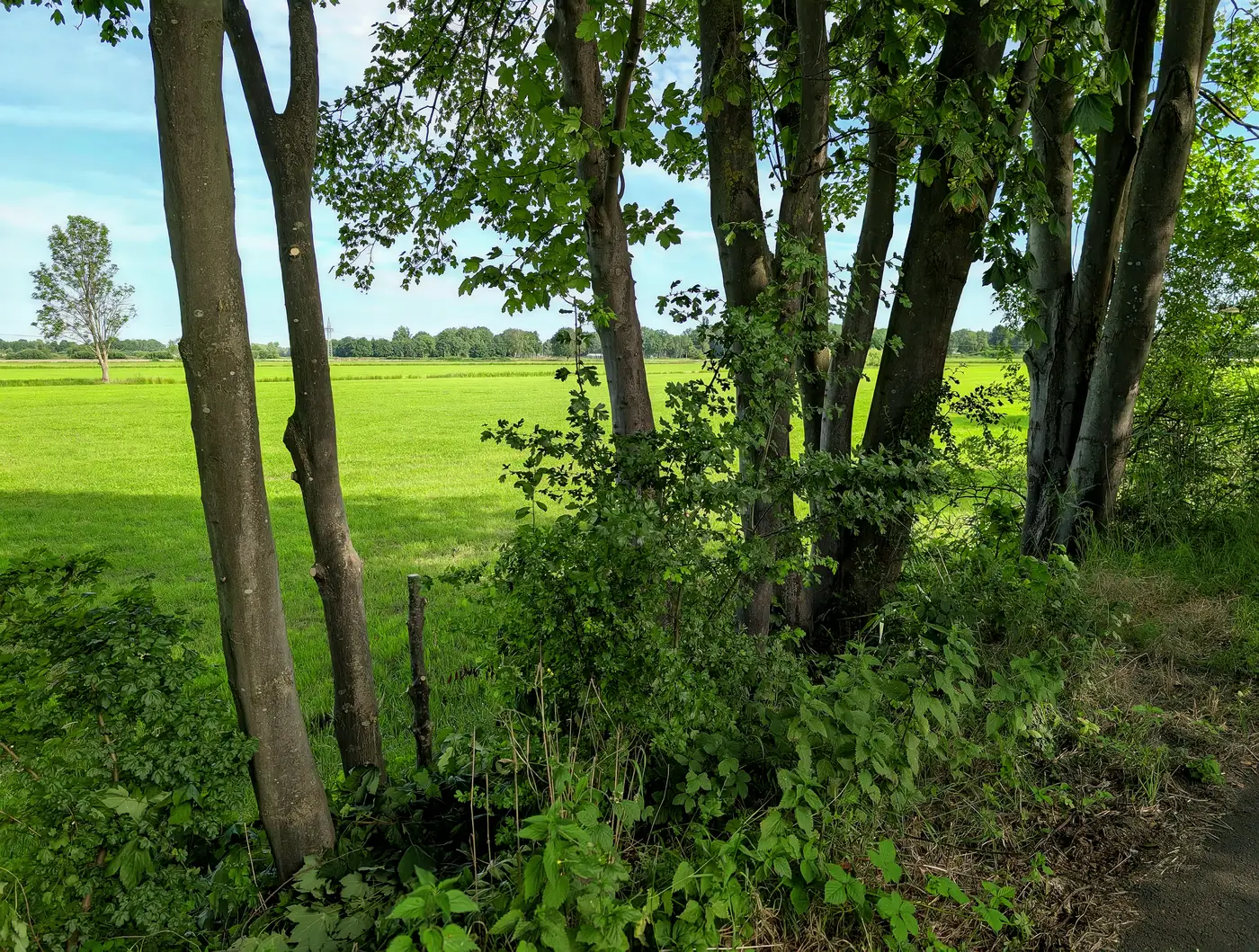
Every planning season the same question comes up in the yard: send the brush hog down this segment, or call in the boom arm? Guess wrong and you're either grinding a rotary deck against saplings it can't shear, or running a boom mower at boom-mower day rates down a flat stretch that a $40,000 tractor and deck could've handled in half the time.
It's rarely one machine for the whole corridor. The right call matches the tool to what's standing in each segment.
What each machine is built for
A rotary cutter, the brush hog most crews already own, is a spinning deck with free-swinging blades. It's fast on open, relatively flat ground and handles grass, weeds, and light brush fine. Push it into anything with stems past an inch or so in diameter and the blades start bouncing off instead of cutting clean. Wet ground, ditches, and slopes are where a rotary deck gets stuck or tips.
A flail mower trades the open blades for chains or knives on a rotating drum. It mulches finer, handles small-diameter woody growth better than a rotary deck, and does better on rough or uneven ground. The tradeoff is ground speed. A flail pass takes longer per mile than a rotary pass on the same terrain.
A boom mower, tractor-mounted or on an excavator arm, is the tool for everything a deck can't reach or can't chew through. Ditch bottoms, under guardrails, steep side slopes, standing water, brush with stems up to several inches. The operator doesn't drive the cutting head over the ground at all, just swings the arm, so it works where a rotary or flail unit would bog down or roll.
Matching equipment to the segment, not the whole corridor
Most crews default to running one machine down the full right-of-way because that's how the contract reads, or how the schedule's always been built. That's where the cost creeps in. A boom arm crawling along a stretch that's really just mowed grass is slow and burns more of the day rate than the segment needed. A rotary deck sent into a low spot with three-year regrowth and standing saplings either stalls out or leaves the brush standing, which means someone has to come back.
What fixes it is knowing ahead of the truck roll which segments have woody growth working its way toward the mow line, and which ones are still grass and scattered weeds that any deck handles fine. That's the kind of segment-level call Pipeline Vegetation is built to feed into the schedule, flagging where growth is closing in before a foreman finds out standing in the ditch.
Reading a segment before you dispatch
A few signs point straight to the boom arm instead of the deck:
- Standing water or soft, saturated ground where a mower would sink
- Slope grade steep enough that a rotary or flail unit isn't safe to run
- Stems thick enough that a rotary blade shears ragged instead of clean, usually an inch or more in diameter
- Fence lines, valve sites, or structures where the operator needs to reach around something rather than drive over it
If none of that applies and it's mostly grass with a few scattered saplings, flail or rotary gets the segment done faster and cheaper. Flail if the ground is rough or the brush is a little heavier than a rotary wants to chew; rotary if it's open and mostly grass.
The cost of guessing wrong
Send the wrong machine and you pay for it twice. Once in the wasted pass, and again in the callback trip once someone notices the growth that got left standing is now closer to the line than it was last quarter. Scheduling leads who can see which segments need the heavy equipment, and which ones don't, cut both kinds of waste out of the season.
If you'd rather dispatch crews against a segment-ranked list of where woody growth is closing in on the mow line than guess from last year's pass, take a look at how Pipeline Vegetation builds that list from the corridor's quarterly imagery.