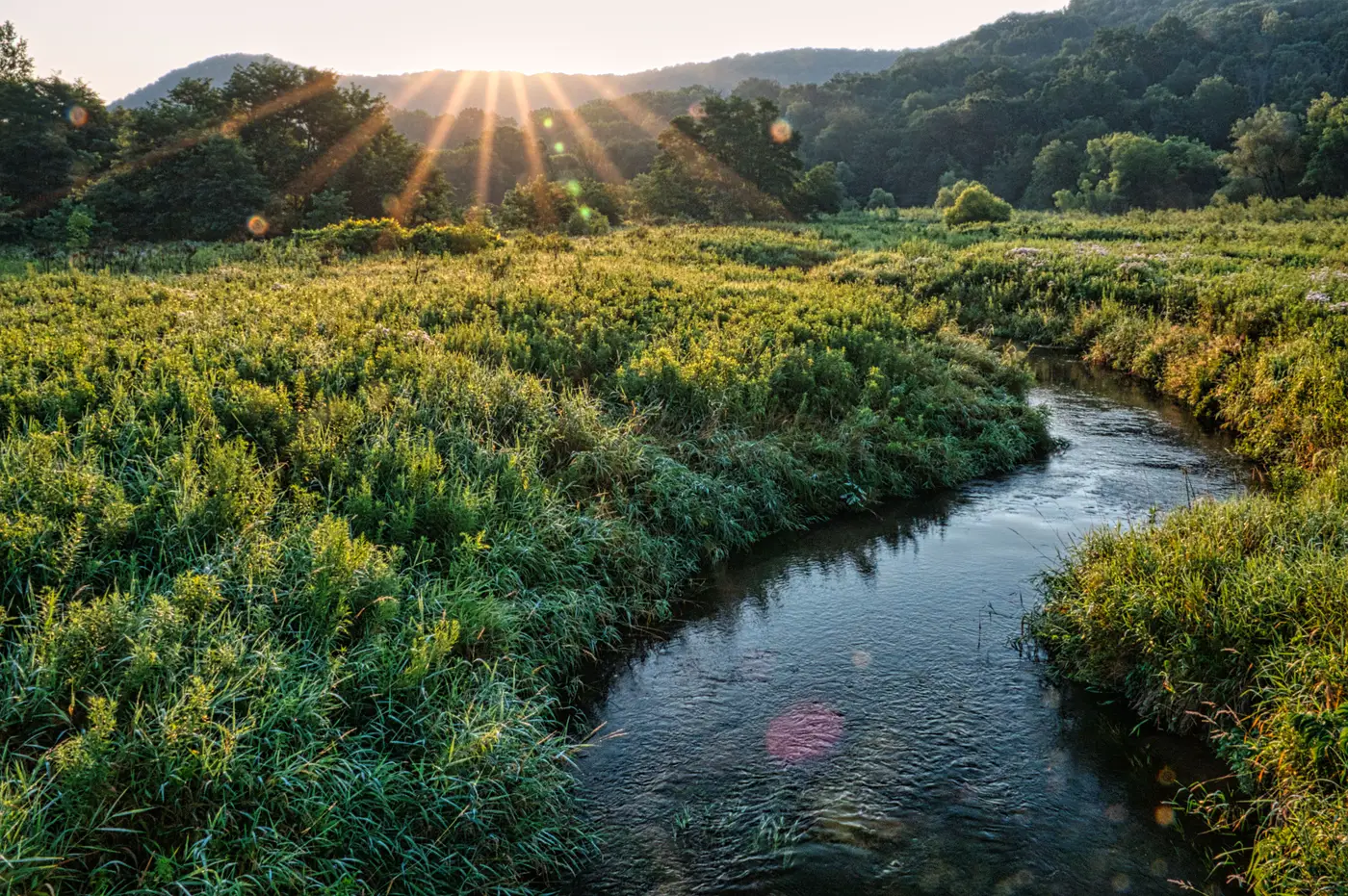
There's one on every corridor. A segment that shows up on the priority list quarter after quarter, no matter how aggressive the cut was last time through. Ours was a stretch of river-bottom crossing, maybe four hundred meters, sandwiched between two upland sections that behave themselves for a full year between visits. This one never did.
The first quarter it ranked high, nobody thought much of it, since spring flush and a wet bottom are just how river crossings behave. The crew went in, cut it back hard, and moved on. The second quarter, the same segment showed up near the top again. The third quarter, it was still there. That's when it stops being a coincidence and starts being a pattern worth writing down.
What we found, once somebody walked it with a notebook instead of just scheduling around it, was a mix of black locust and silky dogwood working the disturbed soil along the old access road grade. Locust suckers hard after a cut, sometimes harder than before, and the dogwood was getting a boost from standing water that never quite drained after the crossing was regraded a few years back. Cut that stuff on a calendar schedule and you're basically coppicing it. Every pass makes the root system stronger and the regrowth denser. It's the vegetation equivalent of pruning a lilac to make it bushier.
The fix meant putting that segment on its own mowing schedule, timed to the soil and regrowth underneath it instead of the corridor's standard ninety-day clock. Once we flagged the drainage issue to the ops team, the pattern made a lot more sense. A culvert nobody had looked at in a while was half-choked, keeping that bottom wetter than the rest of the right-of-way for most of the growing season. Wet soil plus locust root suckers plus a cutting schedule that happened to hit right at the point of maximum regrowth vigor, three times running, no big mystery once you see the whole picture.
This is the thing about a fixed quarterly mow-everything schedule: it treats every segment the same, and most segments earn that treatment. Upland clay with scrub oak and some blackberry doesn't need the same attention as a wet bottom with locust and dogwood working overtime. But a calendar doesn't know the difference between a segment that's basically done growing until next spring and one that's going to be back at mow-line height in ten weeks. It just knows it's been ninety days.
What actually told the story here wasn't gut feel or crew memory, it was watching the same segment rank against every other mile of corridor, quarter after quarter, and noticing it never dropped out of the top ten. That kind of pattern is hard to see from a truck window and easy to see once you've got a ranked list sitting in front of you every ninety days. Pipeline Vegetation builds that list from multispectral imagery each quarter, segment by segment, so the stretches closing in fast on the mow line sort themselves to the top instead of getting lost in a schedule built around the whole corridor averaging out fine.
We ended up clearing that culvert, which took care of about half the problem on its own. The locust is still locust. It'll always want cutting more often than the oak ridge two miles up. But at least now it's getting cut because it needs it, not because the calendar said so, and the crew isn't surprised every time they roll back in and find it's already waist-high again.
If your corridor's got a segment like that, one that just won't quit no matter how hard you hit it, the first question isn't "do we need to cut more." It's "what's different about this four hundred meters that the rest of the line doesn't have." Usually there's an answer. You just have to be looking at the same stretch long enough, across enough passes, to ask the question in the first place.
Worth finding out what your own corridor's been trying to tell you for the last three quarters.